Do you celebrate Name Days where you live?
In Sweden, from the 18th century onwards, names used by the royal family were introduced to the Swedish list of name days, followed by other common names. The monopoly on almanacs, held by the Royal Swedish Academy of Sciences, expired in 1972 and so did the official name day list. Competing lists began to emerge. However, widespread dissatisfaction with the confusions of different lists prompted the Swedish Academy to compile a new two-name list which was accepted in 2001 and in nation-wide use since then.
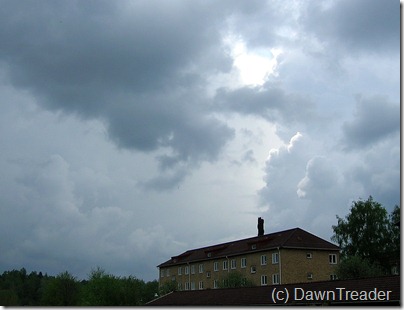
By old tradition, the week just gone by, 19-24 July, has six female names in a row: Sara, Margareta, Johanna, Magdalena, Emma, Kristina. (My middle name is Christina.) So it has been called Women’s Week, and also names like Tear Week, since it also has the rumour of often being wet and rainy.
We’ve had some rain this week, but also sun. Today the Crying Women’s Week is officially over. (Name of the Day is Jakob). But I woke up to 10°C (the coldest we’ve had in a long time) and heavy rain all morning. So obviously men cry too! I’m not putting too much trust in the old folklore…

So what about the dogs? Well, I learned yesterday from Ginny’s blog that in English this time of the year – not just last week but about a month onwards - is often referred to as Dog Days. I found this piece of information fascinating, and further research resulted in a post at my Harry Potter blog Through My Spectrespecs: Dog Days and Sirius Black. The connection is that the name “dog days” go back to Greek and Roman traditions, referring to the star Sirius, also called the Dog Star. And for those not familiar with the Potter books, Sirius Black is a character in the HP books who sometimes takes on the shape of a dog. For details, go read the other blog!
In Swedish, we also have a name for this period corresponding to the English Dog Days, but in our language and tradition it does not refer neither to dogs nor the star Sirius; but would simply be translated “rot month”. The month when things tend to go bad, one way or another. Especially before the days of refrigerators and freezers, it was difficult to keep food fresh during this often hot and humid period of the year. This also led to infections and diseases; the connection perhaps not always clear to people in the past. I guess it was also a critical time for harvests, which could either get too much water from above or too little. In folklore, it was also said to be a month when all kinds of sinister omens might occur - like calves being born with two heads.